News
Reclaiming the Heartland: Owamni's Culinary Journey through Indigenous Flavors
The heartland of America has long been a region shrouded in misconceptions, often dismissed as a mere "flyover" zone. However, as the Eater series on the subject has revealed, this vast expanse is a tapestry of rich culinary heritages, woven together by the diverse Indigenous communities that have called it home for centuries. At the forefront of this culinary renaissance is Owamni, a Minneapolis-based restaurant that is redefining the notion of "heartland cuisine" by championing the flavors and traditions of the region's first inhabitants.Decolonizing the Heartland, One Plate at a Time
Reclaiming the Culinary Narrative
The heartland of America has long been a region shrouded in misconceptions, often dismissed as a mere "flyover" zone. However, as the Eater series on the subject has revealed, this vast expanse is a tapestry of rich culinary heritages, woven together by the diverse Indigenous communities that have called it home for centuries. At the forefront of this culinary renaissance is Owamni, a Minneapolis-based restaurant that is redefining the notion of "heartland cuisine" by championing the flavors and traditions of the region's first inhabitants.Chef Sean Sherman, a member of the Oglala Lakota tribe from Pine Ridge, South Dakota, has made it his mission to "decolonize" the culinary landscape of the heartland. Through Owamni, he is shining a spotlight on the incredible agricultural heritage of the Mandan, Arikara, and Hidatsa tribes, as well as the bison-centered foodways of the Plains tribes like the Lakota and Cheyenne. By elevating these Indigenous culinary traditions, Sherman is reclaiming the narrative and challenging the dominant perception of what defines the heartland's cuisine.Celebrating Indigenous Flavors and Techniques
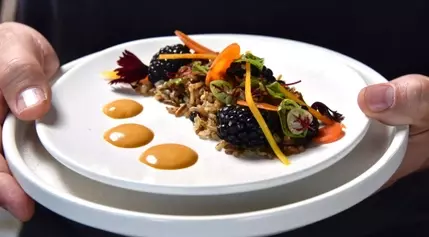
At Owamni, the menu is a celebration of the region's Indigenous flavors and techniques. From the use of wild rice, a staple ingredient in many Native American cuisines, to the incorporation of foraged berries and maple-infused pepita dressing, every dish tells a story of the land and its original stewards.The wild rice salad, for instance, is a testament to the ingenuity and resilience of the region's Indigenous communities. Wild rice, a nutrient-dense grain that has been cultivated in the heartland for centuries, is the foundation of this dish. Paired with a medley of fresh berries and a maple-infused pepita dressing, the salad is a harmonious blend of sweet, tart, and earthy flavors that evoke the essence of the heartland.Beyond the ingredients, Owamni also pays homage to traditional cooking methods. The restaurant's commitment to using only pre-contact ingredients and techniques, such as wood-fired cooking and the use of stone tools, further reinforces its dedication to preserving and celebrating the culinary heritage of the region's Indigenous peoples.Driving Food-Focused Tourism and Economic Empowerment
As Sherman envisions, Owamni's success could be the catalyst for a broader movement to elevate Indigenous cuisine across the heartland. By showcasing the rich culinary traditions of the region's Native American tribes, the restaurant has the potential to drive a surge of food-focused tourism, allowing visitors to experience the true flavors of the area.Moreover, the rise of Indigenous-led restaurants like Owamni can have a profound impact on the economic empowerment of Native American communities. By creating opportunities for Indigenous chefs, farmers, and food producers to share their stories and showcase their products, these establishments can serve as engines of economic growth and cultural preservation.Bridging the Gap between the Heartland and the Coasts
While the heartland may be geographically distant from the culinary hubs of the coasts, the work of Owamni and other Indigenous-led restaurants is helping to bridge that gap. By bringing the flavors and traditions of the heartland to a wider audience, these establishments are challenging the notion that true culinary innovation and excellence can only be found in the major metropolitan areas.For those of us who call the coasts home, Owamni's wild rice salad with berries and maple pepita dressing serves as a delicious invitation to explore the rich and diverse culinary landscape of the heartland. It is a reminder that the true essence of American cuisine lies not in the homogenized, mass-produced offerings, but in the vibrant, locally-sourced, and culturally-rooted dishes that have been nourishing communities for generations.As we continue to grapple with the complexities of defining the heartland, Owamni's culinary journey offers a powerful and inspiring example of how we can reclaim and celebrate the region's Indigenous culinary heritage. By embracing these flavors and traditions, we can not only deepen our understanding of the heartland, but also forge a more inclusive and equitable vision for the future of American cuisine.